Our Record

The Renewed Hope Agenda

The Record, Sector By Sector

Explore the policies, programmes and milestones across Nigeria’s development priorities.

Economic Reforms

On 26 June 2025, President Tinubu signed four tax reform bills into law. The package addresses tax rules, tax administration, the Nigeria Revenue Service and cooperation between revenue authorities.

The reforms are intended to simplify a fragmented tax system and improve administration. The signing is a policy milestone; its impact depends on implementation.

$39bnreserves after FX unificationSee the source

Source: State House · 26 June 2025 ↗

Infrastructure

On 31 May 2025, the President commissioned the first phase of the Lagos–Calabar Coastal Highway alongside road and bridge projects across Nigeria.

The announcement covered completed works as well as the launch of further construction. Commissioning a section does not mean the entire coastal highway is complete.

6,000MWaverage power generation, up from 4,000MWSee the source

Source: State House · 31 May 2025 ↗

Health

In its November 2025 health-sector review briefing, the Federal Ministry of Health and Social Welfare reported the deployment of 774 National Health Fellows across local governments.

The ministry also reported more than 435 health facilities revitalised in priority local government areas. Its review acknowledged continuing challenges with financing and affordable care.

3,158primary healthcare centres completedSee the source

Source: Federal Ministry of Health and Social Welfare · November 2025 ↗

Education and Skills

The Nigerian Education Loan Fund administers the federal student-loan initiative, designed to reduce financial barriers to higher education.

Technical-skills programmes, including 3MTT, also support the administration’s education and employment agenda.

1.5mNELFUND student loan beneficiariesSee the source

Source: Nigerian Education Loan Fund ↗

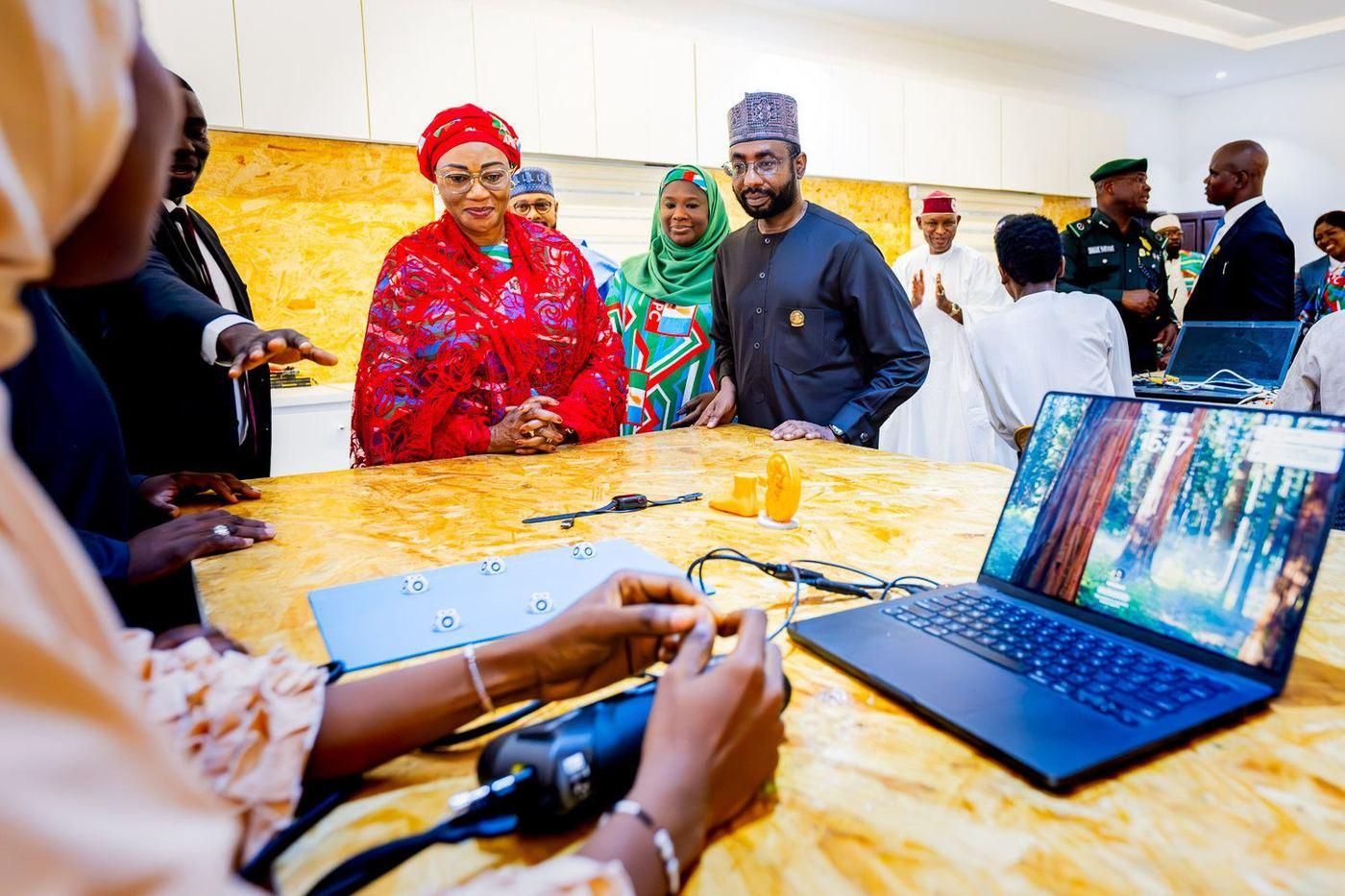
A technology demonstration during the academy tour

Technology and Innovation

Digital literacy, technical talent, startup support, research and digital public services are brought together in one place below.

The main computer hall of the Innovation Hub
Digital Literacy for All

Digital skills are increasingly important for employment, entrepreneurship, education and access to public services. Under the administration’s digital development agenda, NITDA expanded training initiatives across different population groups.

Through the Digital Literacy for All (DL4ALL) initiative, 712,899 Nigerians in the informal sector received digital literacy training, helping more people build practical skills for work, business and everyday life.

Other training programmes include Cisco Skills for All and related academic support initiatives; the Digital Economy Employability Programme (DEEP); NITDA’s Coursera partnership; ethical hacking and cybersecurity bootcamps; blockchain developer training; and digital literacy training for civil servants and NYSC members.

3MTT and the Development of Technical Talent

The Three Million Technical Talent (3MTT) programme is helping build Nigeria’s technology workforce. Across five cohorts, 181,171 learners received training and 16,264 earned certification. The programme also has 220 active Accredited Learning Centres across the 36 states and the Federal Capital Territory.

Among 3MTT learners with available salary data before and after training, average monthly pay rose from ₦80,000 to ₦149,000, while 85.9% experienced an increase in pay.

Expanding Access to Digital Infrastructure

Between 2023 and 2025, 192 Community IT Centres (CITCs) were built and deployed, while 37 Digital Economy Centres (DECs) were established or equipped.

Community and Digital Economy Centres across Jigawa, Ebonyi, Cross River, Niger, Abia, Edo, Delta, Ondo, Kano, Katsina, Lagos, Nasarawa, Yobe, Zamfara and the FCT are expanding access to ICT, digital skills development and grassroots innovation.

Artificial Intelligence and Emerging Technologies

Nigeria is advancing artificial intelligence through the National Artificial Intelligence Strategy, AI developer training, research grants and technology initiatives that connect innovation with agriculture and other sectors.

NITDA and Awarri developed N-ATLAS, a multilingual large language model designed to support language inclusion and the growth of Nigeria’s artificial intelligence ecosystem.

Cybersecurity and Digital Trust

Nigeria is strengthening digital trust through advanced defensive cybersecurity training for 35,917 Nigerians and cybersecurity programmes completed by 30,000 participants. Other activities include National Cybersecurity Awareness Month, regional engagement, startup innovation challenges and tools to support security monitoring.

Startups and Innovation

A competitive digital economy needs startups that can solve local problems, attract investment and expand into new markets. Through its Office for Nigerian Digital Innovation (ONDI), NITDA supports implementation of the Nigeria Startup Act, incubation programmes, investment initiatives and ecosystem coordination.

startups supported in the overall ecosystem summary1,525
proposed Startup Investment Seed Fund: $20m from JICA and $20m from NSIA$40m
startups officially labelled as of May 2026300+
innovation hubs certified across the states and FCT37

Other innovation initiatives include a National Regulatory Sandbox, the Venture Capital Analyst Programme, a Google AI fund and the Llama Impact Accelerator. Together, these initiatives support innovation, investment and commercialisation.

Human Capital Development

These programmes cover different participant groups; the figures should not be added together.

Total people trained across NITDA’s human capital and ecosystem summary
1,586,857
DEEP programme beneficiaries
200,000
Learners trained through 3MTT across five cohorts
181,171
Ethical hacking virtual bootcamp participants
40,834
Blockchain developers prepared
32,000
DL4ALL civil service workforce training
54,377
NITDA–Coursera partnership participants
23,710
3MTT certified learners
16,264
Digital literacy champions among NYSC members
717
Digital Governance and Research

Between May 2023 and May 2026, 956 IT projects underwent clearance, covering ₦1.98 trillion in proposed projects and generating ₦9.16 billion in government savings through project rationalisation, redesign and standardisation.

Policy instruments include the National Artificial Intelligence Strategy, the IPv6-driven Digital Public Infrastructure White Paper, the Online Harms Protection Bill Framework White Paper, the Government Network Infrastructure Baseline and Audit Guideline, and the National Regulatory Guideline for Electronic Invoicing.

Nigeria is advancing artificial intelligence through the National Artificial Intelligence Strategy, AI developer training, research grants and the N-ATLAS multilingual language model. The National AI Research Grant supported 45 beneficiaries with ₦5 million each. The Fourth Industrial Revolution Technology Application in Agriculture (FIRTA) initiative supported eight research beneficiaries with ₦10 million each.

These programmes are intended to strengthen local research capacity and encourage practical technology applications in areas such as agriculture and public services.

NITDA’s technology development work includes research, international technology forums and engagement with innovation ecosystems in Africa and beyond. Activities include the Digital Nigeria International Conference, ICEGOV, GITEX Africa, cybersecurity forums and international startup growth programmes.

The aim is to connect Nigerian innovators with knowledge, investment, commercial opportunities and policy conversations that can support the development of the digital economy.


Reporting period: May 2023–May 2026. DL4ALL training total: 712,899.

Agriculture

Technology is supporting agricultural productivity and practical solutions for farmers through initiatives such as NAVSA, the AgriConnect pilot, the Hack4Livestock Innovation Programme and research grants for agricultural technology applications.

Women and Inclusion

Through the Renewed Hope Initiative, 540 women received training.

Women-focused initiatives include Renewed Hope Initiative training for 540 women, Gina Mata and Gina Al-Umma with 402 participants, Igniteher with 157 participants, and International Girls in ICT Day activities that trained 100 secondary school girls.

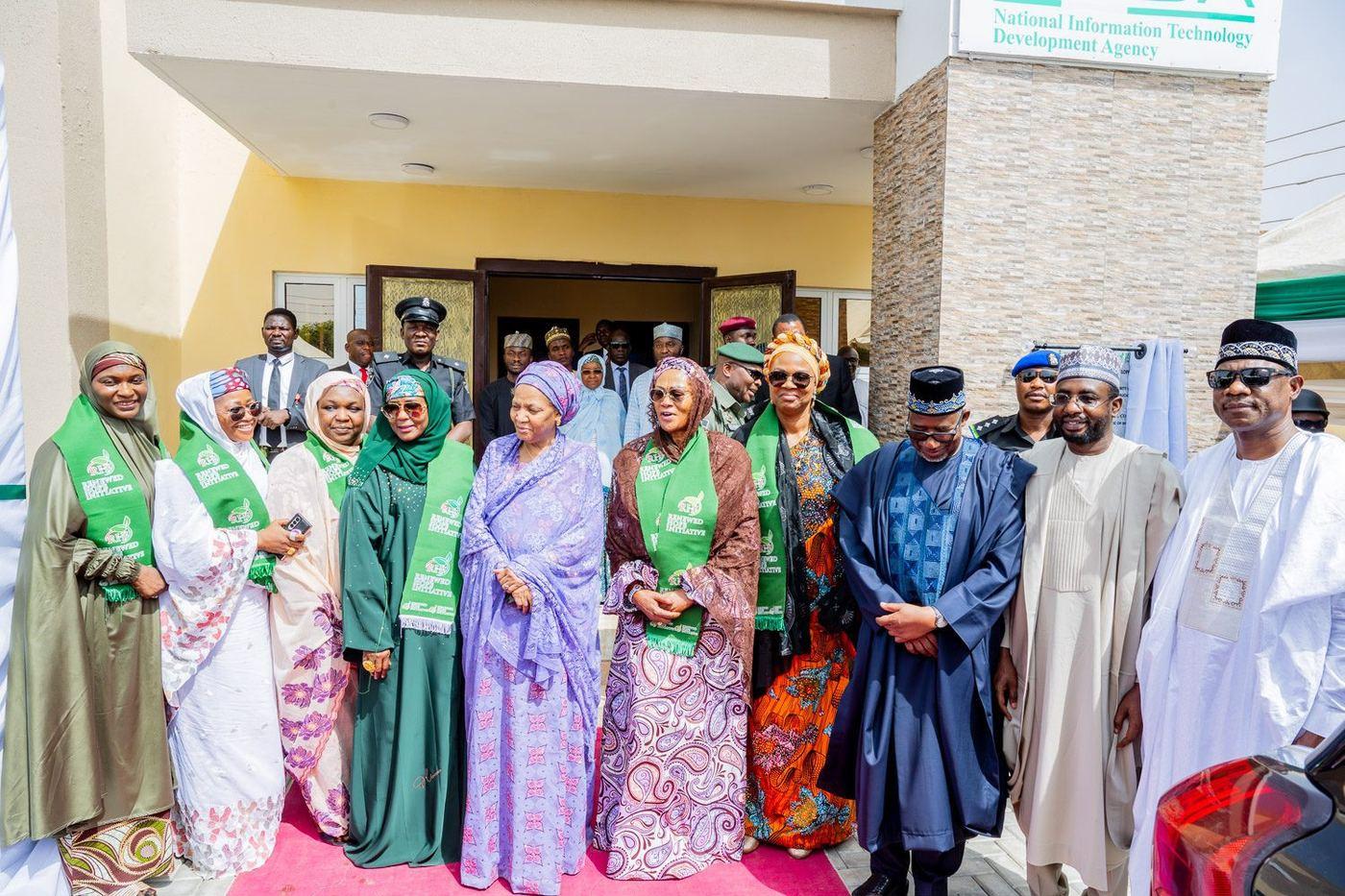
Guests at the entrance of the Renewed Hope Initiative ICT Centre, Bauchi